Lido Begins Moving Validators to 0x02 Credentials
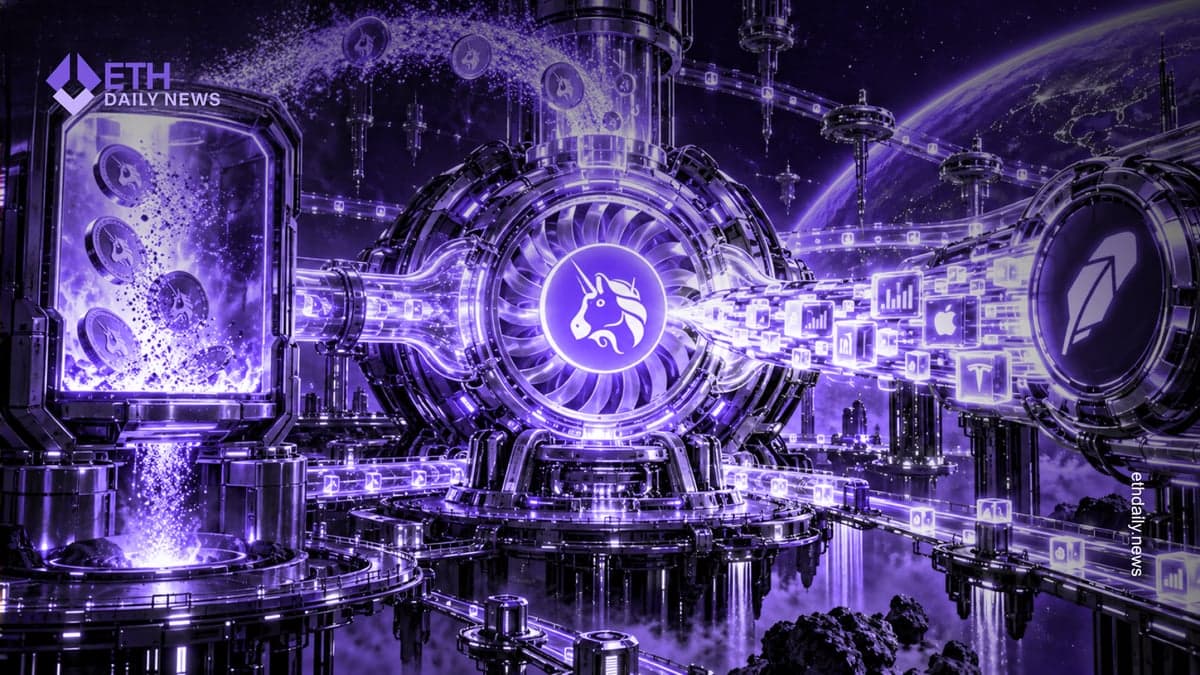
Lido has started the migration of its legacy validators to Ethereum’s newer 0x02 withdrawal credentials, marking the beginning of a major consolidation of its staking infrastructure. According to the supplied report, Lido migrated its first Lido Core validator from 0x01 to 0x02 credentials, starting the broader transition involving approximately 8.4 million staked ETH.
The migration is designed to move Lido’s stake from its legacy Curated Module into the new Curated Module v2 (CM v2). Lido’s official documentation confirms that CM v2 supports 0x02 withdrawal credentials and uses a weighted approach to distribute stake among node operators.
The supplied report says the process could reduce Lido’s validator count from more than 265,000 validators to roughly 4,000 active validators, with the consolidated validators able to hold compoundable balances. This change is made possible by EIP-7251, which was included in Ethereum’s Pectra upgrade.
EIP-7251 Enables Larger Ethereum Validators
Before EIP-7251, Ethereum validators had a maximum effective balance of 32 ETH. The upgrade increased that ceiling to 2,048 ETH, allowing eligible validators to accumulate rewards and operate with substantially larger balances. Ethereum’s documentation confirms that 0x02, or Type 2, withdrawal credentials are associated with this higher maximum effective balance and compounding functionality.
The change also enables large staking operators to consolidate multiple 32 ETH validators. The Ethereum Foundation said EIP-7251 allows larger operators to merge validators and reduce the bandwidth requirements associated with maintaining a large validator set.
At the network level, the supplied report estimates that the transition could eventually reduce Ethereum’s total validator count by about 30% and lower consensus attestation traffic per epoch by approximately 29%. These figures describe the broader impact expected from validator consolidation rather than a change to Ethereum’s underlying staking requirements.
Morpho Adds Coinbase Tokenized Stocks as Loan Collateral
While Lido is restructuring Ethereum staking infrastructure, Morpho is expanding the types of assets that can be used in onchain credit markets. The supplied report says Morpho has launched support for borrowing USDC against Coinbase Tokenized Stocks on Base, with users able to access both variable- and fixed-rate lending markets.
Coinbase says its Tokenized Stocks are issued as B20 tokens on Base and represent a beneficial claim on corresponding real shares held in regulated custody. The platform currently describes the product as providing eligible users with onchain exposure to individual stocks while allowing those assets to be used across the Base ecosystem.
The markets described in the supplied report include tokenized representations of Alphabet (GOOG), Meta (META), Nvidia (NVDA), Apple (AAPL), and the S&P 500 ETF token (SPCX). The initial loan-to-value limit is set at 62.5% across the markets. A live Morpho market for NVDAc, for example, currently shows a 62.5% liquidation loan-to-value threshold on Base.
Stock-Backed Lending Extends Base’s DeFi Use Cases
The addition of tokenized equities gives eligible users another way to access liquidity without necessarily selling their onchain stock exposure. Morpho has previously described tokenized stock-backed lending as a way for users to pledge tokenized securities as collateral for loans, bringing traditional forms of portfolio-backed credit into onchain markets.
The supplied report says these lending markets are not available to U.S. persons or users in restricted jurisdictions. Coinbase's own Tokenized Stocks documentation likewise states that the product is offered under Regulation S and is unavailable to U.S. persons and certain restricted jurisdictions.
Morpho's model uses independent risk curators to establish market parameters, while its isolated-market architecture allows individual lending markets to have their own risk configurations. Morpho has also highlighted tokenized-stock collateral as an important part of its broader effort to expand onchain credit beyond traditional crypto-backed loans.
Base Tests Conditional Transactions With Cobalt
Base is also preparing a protocol change aimed at improving how transactions behave when the blockchain state changes before execution. Its upcoming Cobalt upgrade will introduce Validity Transactions, an experimental feature that is already available for testing on Vibenet.
Base's developer network describes Validity Transactions as transactions that can remain pending until specified onchain conditions are satisfied. Users can attach state and block-number conditions to signed transactions, after which the sequencer evaluates those conditions before including the transaction.
The supplied report explains that the feature is intended to replace unconditional transaction execution with conditional block inclusion through a new RPC method. Predicates can reference information such as account balances, storage-slot values, block numbers, and Flashblock indices.
How Validity Transactions Could Reduce Failed Conditional Trades
Under the current transaction model, a transaction can be included in a block even if the state it expected has changed. For example, an order that depends on a particular balance or market condition may no longer be valid by the time it reaches execution, yet the transaction can still consume gas before reverting.
Validity Transactions change that process by allowing the conditions to be checked before the transaction is included. If the required predicates are no longer satisfied, the sequencer can leave the transaction out of the block instead of executing a transaction that is expected to fail.
Base says the feature is designed to support intent-like transaction flows using ordinary account transactions, without requiring a keeper or custom settlement contract.
The supplied report says Cobalt is scheduled for later this month. Base's status page currently lists a Cobalt upgrade for Base Sepolia on September 23, 2026, providing a current testnet milestone for the upgrade.
Three Infrastructure Changes Point to Broader Onchain Automation
The developments at Lido, Morpho and Base address different parts of blockchain infrastructure, but all three involve making existing systems more efficient or programmable.
Lido's validator consolidation uses Ethereum's higher effective-balance limits to reduce the number of validators needed to manage a large amount of staked ETH. Morpho is extending onchain credit to tokenized traditional assets, while Base's Validity Transactions introduce programmable conditions that can be checked before transactions enter a block.
Together, these changes show how Ethereum and its surrounding networks are continuing to develop beyond basic transfers and token trading. The focus is increasingly on capital efficiency, automated validation, validator consolidation and broader use of tokenized assets within onchain financial applications.