Uniswap’s Annualized UNI Burn Rate Tops $250 Million
Uniswap’s UNI burn rate has climbed beyond an annualized $250 million, according to Uniswap founder Hayden Adams, marking another sharp increase in the amount of value being directed through the protocol’s token-burn mechanism.
Adams highlighted the milestone on X on Sept. 8, updating an earlier post in which he said the trailing seven-day UNI burn rate was approaching an annualized $200 million. The latest figure represents a run-rate calculation, rather than $250 million of UNI already being destroyed over the course of a year.
An annualized burn rate takes the amount burned during a recent period and projects that pace over 12 months. That means the figure can rise or fall quickly as trading activity changes. The latest jump therefore reflects stronger recent Uniswap activity rather than a permanent change to the annual amount of UNI that will be burned.
How Uniswap’s UNI Burn Mechanism Works
The increase is connected to UNIfication, the governance overhaul proposed by Hayden Adams, Ken Ng and Devin Walsh in November 2025. The proposal introduced a new model in which Uniswap protocol usage would contribute to UNI burns.
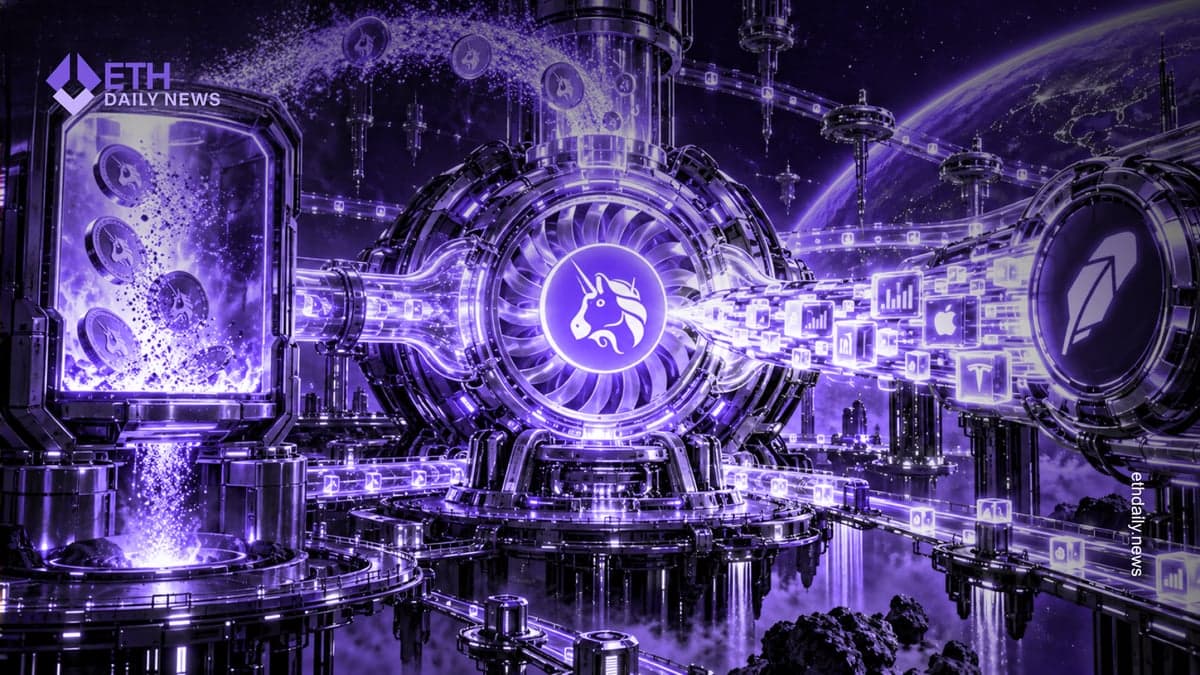
Under the mechanism, protocol fees are collected through onchain contracts and ultimately processed through the burn system. Uniswap’s developer documentation explains that collected fees can flow into a TokenJar, while the Firepit releaser burns UNI as part of the process used to release the accumulated assets. The mechanism is designed to connect protocol activity with a reduction in UNI supply.
The official Uniswap UNI documentation says protocol fees have been used to burn UNI since December 2025. It also notes that UNI holders govern the protocol and can set or modify protocol-fee parameters through governance.
UNIfication Changed Uniswap’s Token Economics
Before UNIfication, Uniswap’s long-debated fee switch had remained inactive. The new governance framework changed that structure by activating protocol fees and establishing a mechanism to connect those fees with UNI burns.
The proposal also included a 100 million UNI retroactive burn from the treasury. According to Uniswap’s original proposal, that burn represented an estimate of the amount that could have been burned if protocol fees had been active from the beginning.
Uniswap governance subsequently approved the UNIfication proposal in December 2025. Governance records state that the implementation burned 100 million UNI, activated protocol fees for Uniswap v2 and v3 on Ethereum mainnet, and approved a 40 million UNI growth budget over two years.
The Uniswap governance forum continues to track proposals concerning protocol fees, token economics and the expansion of the fee mechanism to additional networks.
Robinhood Chain Is Adding to Uniswap Activity
A major factor behind the recent acceleration has been activity on Robinhood Chain, where Uniswap has become a major venue for decentralized trading.
Recent reporting showed Robinhood Chain generating billions of dollars in daily DEX volume, with a substantial portion of that activity flowing through Uniswap pools. On one high-volume day, Uniswap reportedly processed enough activity on the network to contribute significantly to a record daily UNI burn.
Uniswap burned approximately 184,000 UNI in a single day, worth about $1.15 million, with roughly 150,000 UNI associated with activity from Robinhood Chain. The chain had surpassed $3 billion in daily decentralized exchange volume.
That connection is important because Uniswap’s burn mechanism is activity-sensitive. Higher trading activity can generate more protocol fees, which can ultimately result in more UNI being burned through the protocol’s fee system.
UNI Burn Rate Rose From About $200M to More Than $250M
Adams’ latest update came only days after he highlighted an annualized burn rate approaching $200 million.
The move above $250 million therefore represents a substantial acceleration in the recent seven-day burn pace. It does not mean that Uniswap has already generated $250 million in burns during 2026. Instead, it indicates what the most recent activity would amount to if maintained for an entire year.
That distinction is particularly important when interpreting short-term crypto metrics. A sudden increase in DEX trading can dramatically change an annualized figure even if activity later returns to normal levels.
Uniswap’s official documentation confirms that the protocol’s fee system is designed to connect protocol usage with UNI burns, making trading activity an important factor behind changes in the burn rate.
Why This Matters for UNI
The development gives UNI a different economic narrative from many crypto tokens because the protocol now has an explicit mechanism that links usage with token burning.
The relationship is relatively straightforward: more activity can produce more protocol fees, and the fee mechanism can result in additional UNI being burned. As the number of transactions and trading volume increase, the potential rate of token destruction can therefore increase as well.
However, the annualized $250 million figure should not be interpreted as a guaranteed future burn level. It is based on recent activity and can change if Uniswap volume declines.
What Comes Next for Uniswap’s Burn Rate
The immediate question is whether the recent activity can remain elevated.
The annualized burn rate has moved from roughly $200 million to more than $250 million in a short period, showing how quickly Uniswap’s token-burn metric can respond to changes in trading activity. Robinhood Chain has emerged as an important contributor to that activity, but the annualized figure will ultimately depend on the volume and fees generated across the protocol.
Uniswap is also continuing to evolve its fee infrastructure. Governance has considered expanding protocol fees across additional networks, while the existing mechanism remains focused on connecting protocol activity with UNI burns.
For now, the milestone shows that Uniswap’s fee mechanism has become a meaningful part of the protocol’s economics. The $250 million annualized burn rate is a snapshot of unusually strong recent activity, rather than a promise that the same pace will continue throughout the year.