ZKsync Introduces Airbender Prime for Real-Time Ethereum Proving
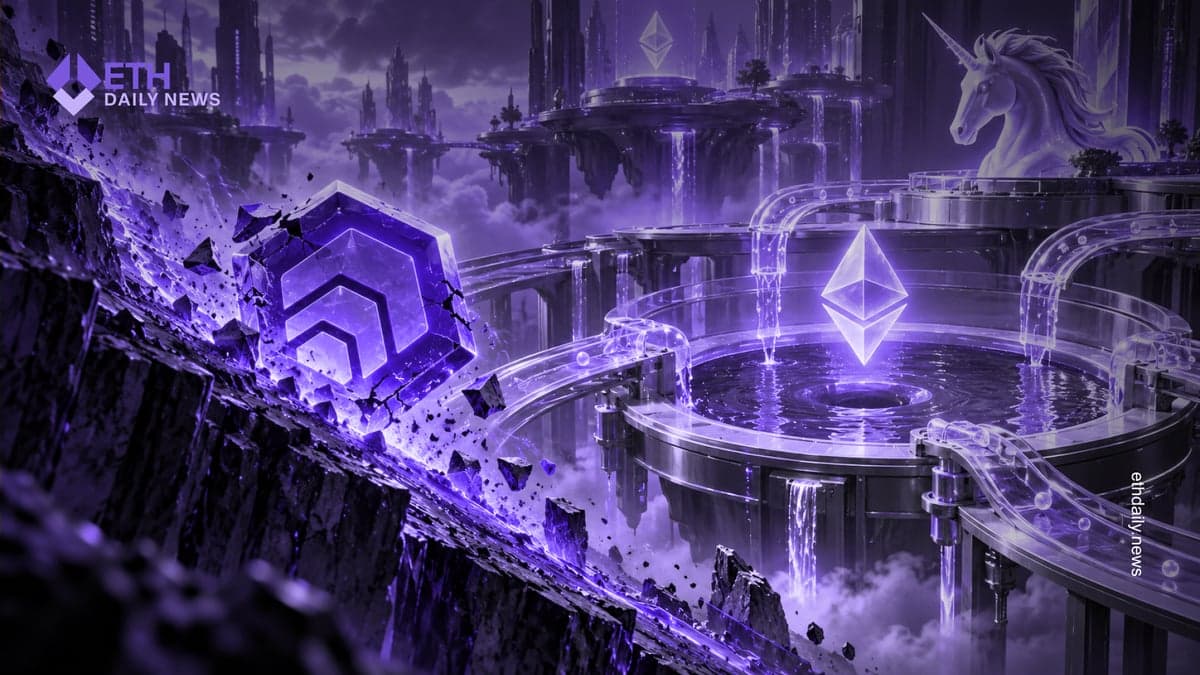
ZKsync has introduced Airbender Prime, an open-source Ethereum prover designed to generate cryptographic proofs in real time using a single graphics processing unit (GPU). Built on the RISC-V architecture, the system aims to make verifying Ethereum blocks more efficient by reducing the computational work required from network participants.
In its official announcement, ZKsync described Airbender Prime as the first Ethereum prover, to its knowledge, to demonstrate real-time proving on one GPU. The system uses hash-based STARKs, GKR sumcheck, WHIR polynomial commitments and BLAKE2s. For planned Layer 1 proofs, it is designed to use Keccak-256 commitments instead of BN254 pairings.
ZKsync tested the prover on an NVIDIA RTX PRO 6000 Blackwell GPU using 7,200 consecutive Ethereum mainnet blocks. The reported results showed that 99% of the blocks were proved in under 10 seconds each, including witness preparation, while every block finished in less than 12 seconds. These figures are based on the project's reported testing rather than a guarantee of performance across all hardware and operating conditions.
How Airbender Prime Could Change Ethereum Verification
Ethereum validators currently execute transactions and reprocess blocks to independently verify their validity. Zero-knowledge proofs can offer another approach: instead of repeating the entire computation, a verifier checks a compact cryptographic proof that the computation was performed correctly.
Airbender Prime is designed to make this approach practical at the pace of Ethereum's block production. Lower proof-generation costs could make independent verification more accessible to institutions, infrastructure operators and other participants that need to check ledger updates.
ZKsync also reported that Airbender Prime leads the ETHproofs public leaderboard for average proving time, GPU efficiency and cost. The published evaluation includes configurations using two and four GPUs alongside the single-GPU test. Real-world performance will depend on hardware, workloads and implementation, but the results highlight the project's focus on reducing the resources needed for Ethereum proving.
Lido Migrates 1.8 Million ETH to New Withdrawal Credentials
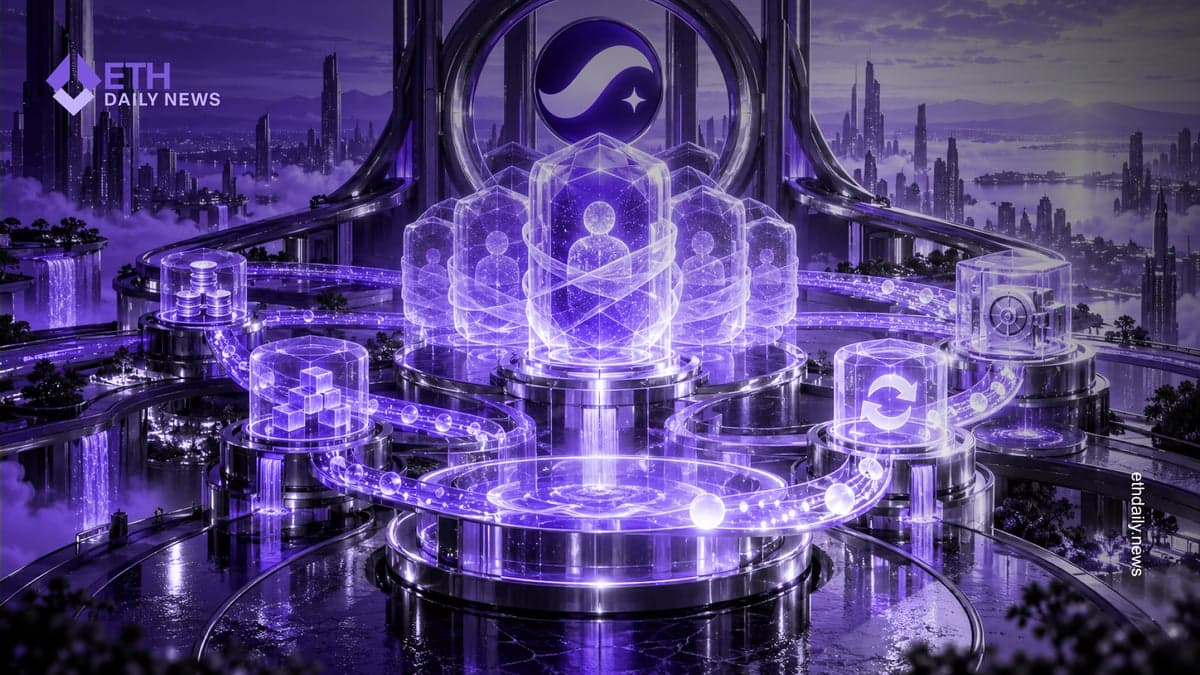
Lido has migrated approximately 1.8 million ETH from validators using legacy 0x01 withdrawal credentials to 0x02 credentials over the past month. The change forms part of a broader consolidation involving 8.4 million ETH and Lido's new Curated Module v2.
The migration is intended to reduce the number of active validators while allowing larger effective balances. Ethereum's EIP-7251 specification, introduced with the Pectra upgrade, enables validators with the appropriate withdrawal credentials to have effective balances of up to 2,048 ETH instead of the previous 32 ETH maximum.
Lido's stated plan is to consolidate more than 265,000 legacy validators into approximately 4,000 active validators with compoundable balances. The project estimates that completing the migration could reduce Ethereum's validator set by about 30% and lower consensus attestation traffic by approximately 29% per epoch. These are projected effects, not confirmed network-wide outcomes. The migration is part of a broader effort to streamline validator operations while maintaining Ethereum's proof-of-stake security model.
Rain Adds Embedded Non-Custodial Wallets for Stablecoin Payments
Stablecoin card issuer Rain has introduced embedded, non-custodial wallets that businesses can integrate directly into their applications. Through one integration, projects can connect wallet functionality with Rain's cards, virtual accounts, onramps, offramps, rewards and payout services.
Rain says wallet keys are stored in a device's secure enclave, while users can sign in through passkeys, email or SMS. Applications can also choose whether to sponsor transaction gas fees. The company's wallet product page provides further information about its embedded-wallet offering.
The wallets support Ethereum, Polygon, Base, Celo, Optimism, BNB Smart Chain, Avalanche, Arbitrum, ZKsync, Monad, Solana and Plasma. Users can hold supported stablecoins and other crypto assets, with functionality varying by network. Rain also plans to add yield-generation features for stablecoin balances later in the year, according to the supplied announcement. The company says users can spend eligible stablecoin balances through its Visa cards.
Interactive Brokers Opens ETH Staking to Eligible Clients
Interactive Brokers has launched Ethereum staking for eligible clients through its Client Portal. The brokerage uses zerohash to provide the custodial staking service, allowing clients to submit staking and unstaking requests and monitor activity through the platform.
At launch, ETH is the only asset available for staking, even though the brokerage supports 20 digital assets. Rewards, when earned, are credited as additional staked ETH and can compound while the position remains staked. Details are available in the company's official staking announcement.
Interactive Brokers has approximately 5.5 million client accounts and around $964 billion in client equity, according to the supplied material. Adding staking gives eligible clients a way to access Ethereum's proof-of-stake reward mechanism through an established brokerage interface. Actual rewards are variable and staking involves risks, including potential restrictions on access to assets.
Other Ethereum and Crypto Ecosystem Updates
Several additional developments were announced across the Ethereum and wider crypto ecosystems:
Protocol Guild: The contributor funding initiative said total distributions to Ethereum core contributors have reached $40 million. Protocol Guild supports contributors working on Ethereum's core protocol.
L2BEAT: The Ethereum Layer 2 analytics project published results from its privacy challenge, adding another development to the ecosystem's ongoing work on privacy-related technologies.
Sourcify: The smart-contract verification project introduced Onlay, a view-only tool designed to help users inspect Ethereum transaction data before signing.
Ethereum Stablecoin Summit: ETHConf announced a Stablecoin Summit scheduled for October 19.
Alchemix: The DeFi protocol published its Q2 2026 financial report.
infiniFi: The project announced its INFI token and token generation event.
Base: The Ethereum Layer 2 network introduced earn-and-borrow functionality as part of its product offering.
Aave: The lending protocol approved incentives related to Coinbase tokenized stocks.
The supplied updates also included an announcement that the U.S. Office of the Comptroller of the Currency fined Bank of America $1.2 billion for money laundering. That serious regulatory claim requires confirmation from an official enforcement notice before publication; speculation about the total amount of money involved should not be presented as fact.
What These Developments Mean for Ethereum
The announcements illustrate several areas of development across Ethereum and related crypto infrastructure: faster cryptographic verification, more efficient validator operations, stablecoin payment integration and broader access to staking.
Airbender Prime's reported performance could make real-time proving more practical if it can sustain comparable results beyond controlled testing. Lido's validator consolidation targets lower operational overhead, while Rain's wallets and Interactive Brokers' staking service bring additional crypto functionality into payment and brokerage platforms.
These projects address different challenges, so their effects should be evaluated separately. Proving performance, validator efficiency, wallet adoption and staking participation will depend on implementation and user demand. Together, however, the updates show continued work on the infrastructure and financial services surrounding Ethereum and the wider digital-asset ecosystem.