EIP-8141 Changes How Users Pay for Gas
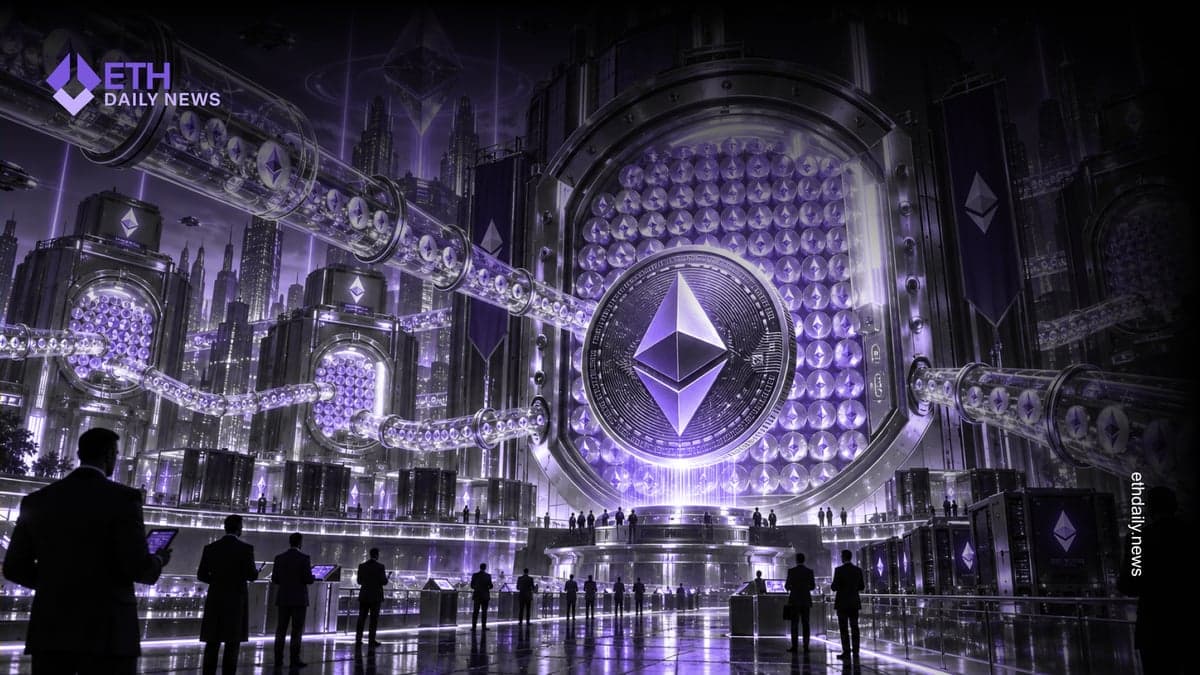
Ethereum's proposed EIP-8141, known as Frame Transaction, could significantly change the way users interact with transaction fees.
The proposal introduces a new transaction format that separates transaction validation, execution and gas payment into different frames. One of its stated goals is to support alternative fee-payment mechanisms, including transactions where users do not need to maintain ETH directly in the account they use for everyday activity.
That distinction is important. Gas abstraction can change the asset a user sees when paying a fee without necessarily eliminating the underlying role of ETH in Ethereum's economic system.
Read the official EIP-8141 proposal
Users Could Pay With USDC Instead of Holding ETH
The easiest way to understand the proposed model is to separate the user experience from the network's underlying fee mechanism.
Imagine a user holding only USDC. Instead of first buying ETH simply to pay a transaction fee, a compatible wallet or application could use a paymaster arrangement to handle the gas payment. EIP-8141 explicitly supports paymasters and says EOAs could use frame transactions for features including sponsored transactions and paying gas with ERC-20 tokens.
In simplified terms, the flow could look like this:
User → pays in USDC → Paymaster handles gas → Ethereum transaction is processed
The important point is that the user no longer needs to think about ETH every time a transaction is submitted. ETH becomes less visible at the application layer, while specialized infrastructure handles the underlying payment process.
Gas Abstraction Does Not Mean ETH Disappears
This is where the debate around Ethereum gas abstraction can become misleading.
EIP-8141 does not propose replacing ETH as Ethereum's native asset. Instead, it introduces a framework that allows transaction validation and gas payment to be defined more flexibly. The proposal describes alternative fee-payment schemes and paymasters as part of its account-abstraction design.
A user paying with USDC therefore should not automatically be interpreted as a transaction that removes ETH from Ethereum's economic model. Depending on the implementation, a paymaster can take responsibility for the gas cost and may receive tokens from the user in exchange. The EIP even gives an example in which an ERC-20 token is transferred to a sponsor, with an optional step that can convert tokens to ETH through an AMM.
That makes the more accurate argument:
Different payment asset ≠ disappearing ETH demand.
Paymasters Become the Bridge Between Users and ETH
Paymasters are central to this model because they can act as the intermediary between a user's preferred payment asset and Ethereum's gas system.
Under EIP-8141, a paymaster can sponsor transaction gas. The proposal also introduces rules around paymaster balances and reserves to make sponsored transactions workable within the public mempool.
For users, this could make Ethereum feel much more like a conventional financial application. A wallet could potentially show a transaction fee in USDC rather than requiring users to understand gas prices and maintain a separate ETH balance.
For infrastructure providers, however, the responsibility does not disappear. Someone still needs to manage the transaction's gas economics, maintain sufficient resources and make the payment arrangement work.
This means gas abstraction could shift where ETH is held and managed rather than simply eliminating the need for ETH across the system.
ETH Still Has a Separate Role in Network Security
Gas is also only one part of ETH's role in Ethereum.
Ethereum currently uses proof-of-stake consensus, meaning validators stake ETH to participate in securing the network. Ethereum's official documentation says validators deposit ETH as collateral, participate in block validation and proposal, and can have their stake destroyed for provably dishonest behavior.
A user who pays a transaction fee with USDC does not therefore eliminate the demand for ETH required by Ethereum's consensus system.
Ethereum's official staking guide
For example, running a solo validator requires 32 ETH, according to Ethereum's official staking documentation. Users can also participate through staking pools with smaller amounts.
This creates an important distinction between transaction-fee demand and staking-related demand. Gas abstraction could reduce the amount of ETH ordinary users need to keep in their wallets while leaving ETH's role as the asset securing the network intact.
The Bigger Opportunity Is Better Ethereum UX
The strongest case for gas abstraction is therefore not that it removes ETH from Ethereum. It is that it could remove one of the barriers preventing new users from interacting with the network.
For newcomers, having to acquire ETH before performing an action can create unnecessary friction. A user may already have USDC, but still need to understand wallets, exchanges, ETH balances and gas fees before completing a simple transaction.
EIP-8141 is designed to address several account-abstraction problems at the protocol level. The proposal says frame transactions can support alternative fee-payment schemes without relying on centralized third-party relayers, alongside batch transactions and other account-abstraction features.
If applications can hide that complexity, Ethereum could become easier to use for people who do not want to understand the underlying mechanics of every transaction.
The Real Question Is Whether Activity Grows
There is, however, a more important question for ETH.
If gas abstraction makes Ethereum easier to use but does not generate substantially more activity, the benefit to the broader ETH economic model could be limited.
The key metric is therefore not simply whether users pay gas with USDC. It is whether removing the requirement to personally hold ETH results in more users, more transactions, more applications and greater economic activity on Ethereum.
If adoption expands significantly, ETH could become less visible to users while remaining deeply embedded underneath the system. Wallets and applications could present fees in familiar assets while infrastructure providers and the protocol continue operating around Ethereum's native asset.
ETH Could Become Less Visible, Not Less Important
Gas abstraction represents a broader shift in blockchain user experience.
The long-term goal is to make users care less about the technical details of the network underneath an application. People may not need to know which token is paying the gas, which account is sponsoring the transaction or how the transaction is structured.
EIP-8141 is still a draft proposal, so its final implementation and adoption can change.
But the underlying idea is already clear: Ethereum can abstract away the user's gas-payment experience without necessarily abstracting ETH out of the network itself.
The real risk is not that users pay gas with USDC. The bigger risk would be removing friction without generating enough additional activity to make the improvement economically meaningful.
If Ethereum succeeds in turning easier transactions into greater adoption, ETH could become increasingly invisible at the front end while remaining essential underneath — as a native asset, a component of gas economics and the asset securing the network through staking.
Gas abstraction may change how users interact with ETH. It does not automatically change why ETH matters to Ethereum.